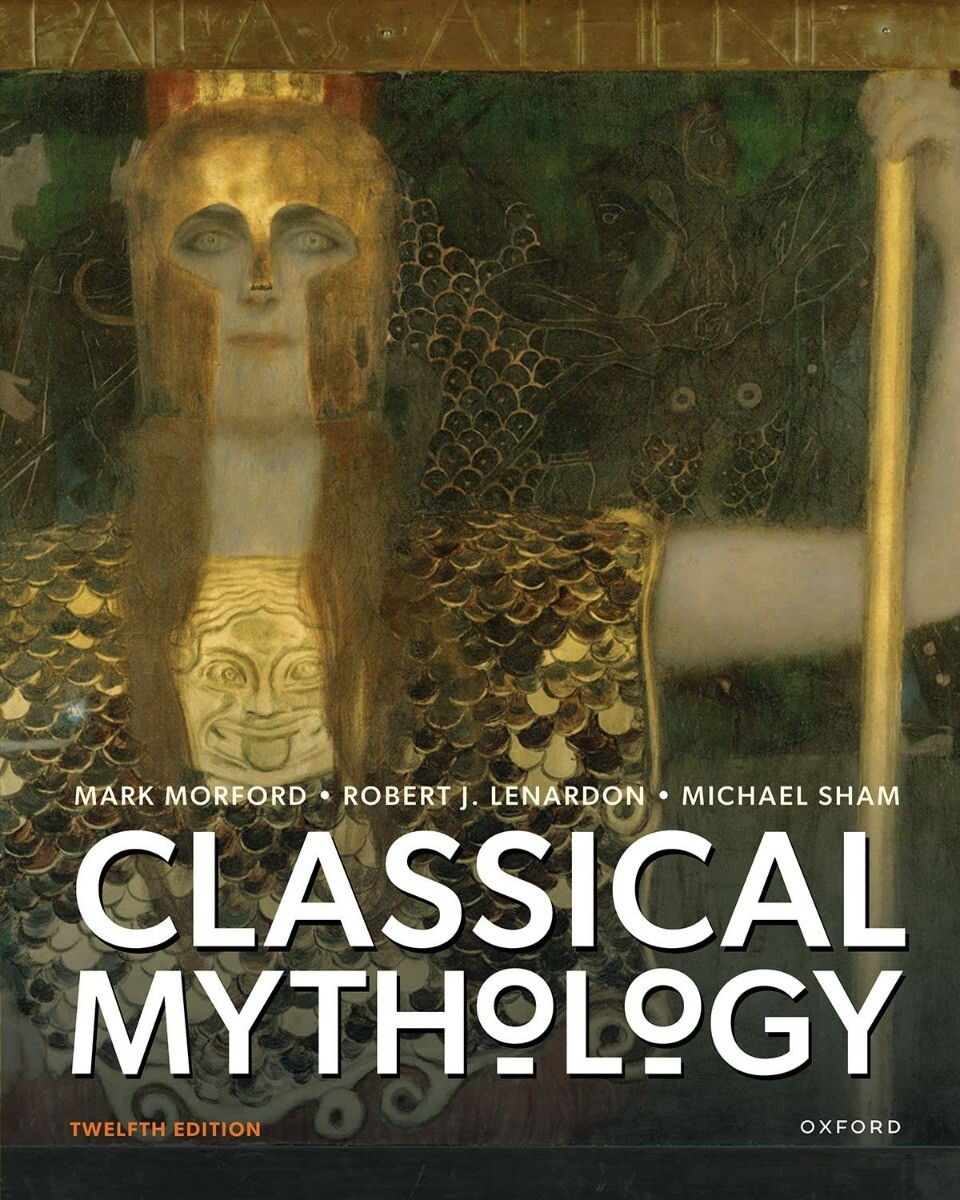
Academic Assignment: Sections 5 & 6 of Classical Mythology, 11th or 12th Edition. Mark Morford, Robert J. Lenardon, and Michael Sham:
The Twelve Olympians and The Nature of the Gods and Greek Religion
Continuing on with this textbook, we’re now getting into the myths properly.
A great companion to our jaunt through Greek religion is the Amazon Prime series, Great Greek Myths. Highly recommend.
Spiritual Assignment: Miasma, or “Employees Must Wash Hands Before Returning to Worship”
Miasma is more than just that smell people describe the unwashed crustpunks at your local Phish concert from having. In Greek religion, it is “The state of ritual impurity. Miasma is a spiritual pollution and subtle energy that can be described as the lingering aura of uncleanliness that various things and actions within the material realm of generation which transgress against the Natural Law may produce and be contaminated by.” Source
This contrasts to Khatharsis, “The state of ritual purity. Katharsis is the natural state of things in accordance to Natural Law, which is called Themis. Katharsis is essential for every human being to maintain, especially during worship, as otherwise all of their spiritual work is fruitless, as the Gods will “not hear your prayers, but spit them back” (Hesiod Work and Days, 724–6). Thus we can understand that purity is inseparable from securing the presence of the divine within human society.”
This is not a uniquely Greek, or even Indo-European, concept. In Shinto, there is kegare (穢れ), essentially describing the exact same thing. In fact, it is taboo in Shinto to perform ritual practices without washing beforehand.
Ancient Greek had an absolutely massive amount of terms for it, which you can find here and I will not reproduce it below due to its length.
Even lesser known cultures, of which spirituality we know precious little, have terms describing it. As Segomâros Widugeni writes of the Gallic vocabulary, they had a number of terms:
Salâ: Dirt, filth, impurity. This is the mundane word for dirt, in the sense of being unclean, not of “soil”. It also appears to have referred to spiritual impurity. It is less value laden than most similar words in other religions, being quite uncomplicated in meaning. There is little surviving lore on what brings salâ, except that, as in other traditions, it appears to have been associated with mundane dirtiness. It is possible that war either created salâ, or else moved participants into a liminal state from which they needed to be reintegrated with society. In addition, it is my UPG that excrement created salâ.
Salâcos: The adjectival form of salâ, meaning dirty, filthy, impure. There is not a lot to say about this one that hasn’t already been said about the noun.
Troxos: Leprous. From the connotations of some of the descendent words, we might take this as referring also to being in a state of spiritual contagion, but it is far from clear. If so, the nominal form is troxiâ.
Glânos: Clean, clear, pure. The opposite of salâcos. This state is obtained by:
Glânosagon: Purification. I have already discussed one method in my ritual outlines. Other methods include: “fire, juniper, whiskey, silver, milk, prayer, water….”
Culos: Sin, violation. The sense here is of a violation of the law, a crime, an unlawful act. It has none of the connotation of “disobedience to God”, “original sin”, or “being in a state of sin” conveyed by the Christian version of “sin”. The term for law in proto-Celtic and Gaulish is rextus, also meaning “right”, and so culos can be seen as a wrong act, as well. In most Celtic traditions, it is corrected by restitution to the victims, though the Gauls did have the death penalty for murder and other especially heinous offences.
Meblâ: Shame. This is the term for the state into one falls after an evil, unvirtuous act. It is, essentially, a loss of eniequos or clutos as a result of one’s own actions. It can only be corrected by living such that one’s reputation is restored.
HellenicFaith.com describes the different types of miasma as:
Childbirth, menstruation, and natural death are all processes of generation which divert or disrupt the order of natural life that are tied with minor miasma (Guenther 2012, 250) (Panopoulos, Pnadion & Tsantilas 2014, 74). Other things which are miasmic typically pertain to the processes of generation which disrupt Natural Law, such as human blood, vaginal secretions, dirt, urine, feces, sexual fluids, sickness, etc. Making a mistake while performing a ritual or disrupting a ritual (in Latin called a vitium, or “defect, imperfection, impediment”) can cause that ritual to become void and also produce miasma. More severely, unjust actions that can be deemed hamartia, or sinful, can produce a far more harmful and negative miasma. These types of miasma are essentially bloodstains and require more substantial methods of purification to be effectively treated, and can come from any number of impious acts such as murder, kinslaying, parental incest, engagement in hubris, goetic practices such as witchcraft, and so on. However the miasma from any of these, whether the transgression which produced it be minor or major, must be treated through ritual methods of spiritual purification. Miasma is troublesome since, if left untreated, could cause a spiritual blindness that prevents us from being able to bear witness to the light of the Gods, thus causing rituals to become ineffective and ill fortune to fall upon us as we are blinded from the benevolent light of the Gods and instead put into communion with spirits of punishment (namely Nemesis and Her retinue of Daimons). This is worsened by how miasma is contagious, as certain events, actions, places, objects, and people in negative spiritual states can inflict and spread miasma upon other individuals, objects, or even places they come into contact with, including areas sacred to the Gods such as temples or altars. This spreading of miasma can harm society as a whole if left further untreated, weakening our connection to the divine and ultimately risks the risk of disasters– both natural and man-made. As such, we can understand miasma as a type of spiritual dirt that is accumulated from merely living. And much like how you should not track mud throughout your friend’s house, you should not track spiritual dirt throughout the houses of the divine when trying to make communion with Them; and so we must maintain ritual purity to secure the presence of the divine within mortal society.
I often describe it as being “unclean” in a literal sense, i.e. the gods must feel the way we do when we see an unwashed or filthy person preparing our food. It can also be “in the incorrect mindset for spiritual work”, such as consumed by rage, hurt, etc and therefore unfit for ritual before gods because you are far too overwhelmed with your own state or issues.
So what can we do about it?
HellenicFaith.com actually breaks down some types of miasma and methods of purification, which I’ll just go ahead and add in its entirety here:
First of all, one could do a very basic hygienic thing: take a bath or shower before engaging in any type of ritual practice or before entering in any sacred space, such as the vicinity of a temple or near the altar. However, this is not enough if one wants to be in an adequate state of ritual purity. What one needs to do is create and use Khernips (Latin: aqua lustralis). Khernips is a lustral or holy water that is used to ritually wash one’s hands and face before entering a sacred space, such as an altar or the precincts of a temple, that is essential to use before performing any type of ritual. It is made out of the two fundamental elements most often used for purification purposes: Fire and Water. Fire is especially important as it’s used ritually to “cleanse, promote healing, and purify” (Panopoulos, Pnadion & Tsantilas 2014, 75). Khernips is very easy to make even at home. Here are instructions on how to make it:
- Get a bowl of water. Ideally sea water or flowing water, such as that of a river (Panopoulos, Pnadion & Tsantilas 2014, 75-76); however, these materials may understandably be unavailable to many. As such, home-made salt water or even simple tap water should suffice.
- Light on fire either some dried herbs (such as verbena or laurel), some incense, a torch, or even a dried leaf or twig on fire above the water and quench it in the water. Leaving them there is optional. When dropping it in the water you may say: “Xerniptosai,” or “Be purified.”
- Wash your hands with the water, then your face. You may say “Kherniptomai,” or “I wash with lustral water.”
- Sprinkle the area and all participants in the ritual with the khernips, saying “Apo pantos kakodaimones,” or “away, every evil spirit!” Alternatively, you can say “Hekas hekas este bebēloi,” or “begone, begone you profane!”
Khernips can also be used to cleanse an item, though to prevent contamination, it is recommended one sprinkles khernips over whatever it is one is trying to cleanse, as opposed to placing the object within the khernips.
Another way one could increase ritual purity is with incense. The two most popular forms of incense in the Graeco-Roman world were frankincense and myrrh (Figula 2018, “Incense”). Incense can be used in ritual by placing resins on burning charcoal, which can both be used as a means of purification by fumigation, or even be used as a sacrifice to the Gods in itself. Ritually, incense smoke and fragrance ascending to the heavens can be used as a way of communion with the divine, used as a means of communicating our prayers with Them (Verbanck-Piérard 2017, 1). Contemporary Roman polytheist Carmelo Cannarella comments on this thusly (Cannarella 2015, “Incense.”):
“Incense smoke rising into the sky is primarily an elevation, an act of transcendence, a moment of connection between the human and the Celestial Deities’ dimension: between Earth and Heaven … The spirals of smoke from incense are released into the air and fly to the sky. This flight of smoking represents the re-union with the Divine Dimension (both for the living beings and in funeral rites) and the flight itself symbolises the ‘freedom of movement’, the liberation from the material sphere, the transcendence of the world”
The healing properties of incense is backed by contemporary scientific studies, which suggest that both substances have a wide range of healing effects that activates poorly understood ion channels in the brain which help alleviate anxiety and depression (ScienceDaily 2019 September 3). Incense can thus help one in achieving a degree of mental purity required before approaching the Sacred.
Approach the Gods in Happiness
Being of mental purity is a prerequisite for the performance of any ritual, as though the Gods are not seen by us, They can direct their divine gaze, which is more powerful than any light, towards us– even as far as our hidden thoughts (Flavius Claudius Iulianus, II 323). As such, one should approach the Gods with a well-disposed mind. Thoughts of incest, murder, kinslaying, adultery, sacrilege, or other impieties, are all considered impure states of mind that one should not be approaching the Gods with (so please, do not actively be thinking of Game of Thrones when you try worshiping the Gods). What one can do to purify their mind (nous) before approaching the divine is a self-preparatory prayer (Petrovic & Petrovic 2016, 48), akin to what Hesiod urges for in his Work and Days (Hesiod Work and Days, 737-41). Negativity in general can also be considered an impure state of mind to be approaching the Gods with. This is because the expected attitude and essential element when receiving the presence of the divine is happiness. This is because it is understood that the Gods live in an eternal state of perfect bliss and blessedness which Aristotle calls makariotes (Latin: beatitudo) (Bodéüs 1992, 117). This eternal state of happiness that the Gods live in is one of the many features that distinguish God from man (in addition to the Gods being immortal, immaculate, perfectly beautiful, all-powerful, etc). As such, happiness is an important value in Hellenism, especially in the context of our worship of the Gods. In order for humanity’s service of the divine to be complete, it must be completed in a joyful manner. Happiness is thus the most appropriate attitude when engaging in Their worship. In the ancient Hellenic world, this is why many religious festivals would frequently feature competitions and games, from sports to the theatrical performances of plays, and see public works raised dedicated to the benefit and/or entertainment of the people. It is also why music is frequent during many forms of ritual worship, and why the hymns are sung during processions and before the altar, rather than recited in monotone.
So if one has tried to approach the altars of the Gods without joy, then they are approaching the Gods wrong, and should not be surprised at any disconnect. Proper participation with the Gods requires blissful attitude. Do not pray in silence; play appropriate ritual music, and vocalize and sing the hymns loudly. Do not merely drag your feet to the altar; dance in procession. Do not wear dreary clothing; wear bright clothing appropriate for ritual. Do not provide the Gods sacrifice simply out of duty; sacrifice out of love, and look to the Gods as Sokrates had: not merely as your lords (despotai), but also as your ancestors (progonoi) (Plato, Euthydemus 302c-d). Embrace the Gods in happiness and look to the Gods as your family, for They are the reason for the birth of all the joys of this world, and Their presence deserves celebration. Worship of the Gods is meant to be a katharsis, not a chore.
Menstruation
The final point I wish to bring up is menstruation. However, before I do this, there is an elephant in the room that needs to be addressed: in the past, menstruation has been explicitly associated with women. However, as our understanding of menstruation develops, there is no reason to continue with this association. Continuing to associate menstruation with women does long term damage to both cis women and the trans community, especially health wise. Many women, even ones who are cis, do not menstruate; and menstruation can also happen both to men and those who are non-binary. As such, it is important to emphasize that menstruation happens to people who menstruate. When we discuss menstruation, we discuss the state of menstruation alone divorced from sex or gender identity, with respect to those who experience dysphoria, as that’s the only relevant thing. A further point to bring up is that this section has been written with the aid of various people who menstruate, from cisgender women to transgender men, who also come from a variety of cultural and religious backgrounds.
In the West, public attitudes and discourse towards the process of menstruation tend to be divorced from any sacral dimensions (Sridhar 2018, 313). While the west reduces menstruation to a mere annoyance that is to be overcome, Hellenism sees the process as something that is sacred and associated with regeneration. Some might see these as opposites, ostensibly claiming the latter being a mere outdated superstition that taboos people who menstruate in opposition to a “modern understanding;” however, there is no reason that medical and scientific approaches to menstruation should come in the way of simultaneously sacralizing and celebrating it (Sridhar 2018, 314). This is especially true when looking to how the desacralization of menstruation to a mere annoyance has negatively affected people who menstruate, often alienating them from their bodies (Sridhar 2018, 315); which is more than clear in how most media represents and commercializes on menstruation, such as television ads or products which often promote language such as “staying free.” To remedy this, menstruation cannot be viewed merely as a biological process, but rather needs to also be understood with all of its cultural connotations. Instead of viewing Hellenic ideas on menstruation as mere irrelevant and negative superstition without even trying to comprehend it, we can instead understand it as something that is both compatible with the modern day and a positive thing which doesn’t taboo people who menstruate.
With the former, we can recognize that our contemporary situation is different from the past, and that times have changed. With the development of technology and growing accessibility of personal hygiene products, people are generally more clean now than they have been in the past, thus allowing for a greater degree of spiritual purity to be maintained also. By no means does this mean we should discard any notion regarding menstruation that has existed in the past; however, it shouldn’t be as much of an obstacle in societies with running water and showers. And with the latter, we can see the positivity in Hellenic understandings of menstruation in that it is ultimately a special privilege available only to people who menstruate that acts as a fundamentally beneficial period of rest, self-discipline, abstinence, asceticism, and self-purification (Sridhar 2018, 318). This is best summarized by Sridhar, who remarks on Hellenic views of menstruation within the 5th century CE Hellenic work Saturnalia by Macrobius (Sridhar 2018, 208):
“From Macrobius’ account, it is clear that although menstruation involved the removal of harmful substances from the body and hence the menstrual blood flow was associated with subtle miasma energies, the process itself was a purification process. . . Not only associated with [miasma] . . . but also as an austerity and self-purification process.”
Rather than seeing menstruation as a terrible blight, Hellenism properly understands menstruation as a sacred celebration; a natural and sacred process (Sridhar 2018, 208), associated with the Goddess Artemis (Latin: Diana) (Sridhar 2018, 179-186; 212-213), that is a temporary state of impurity that, by its very nature, serves as a means and time for austerity and self-purification (Sridhar 2018, 208). This makes menstruation unique among conditions of ritual contamination as katharsis and miasma become two complementary components of the process, rather than diametrically opposed forces. And so we can see that menstruation is an issue of ritual purity, not an issue of people who menstruate being somehow “inherently impure” or “morally bad.” As Kemetic and Mesopotamian polytheist and intersex person who menstruates Erra-Epirri writes (Erra-Epiri 28 March 2016):
“Even in today’s world, independent of any one religion’s considerations on the matter, blood that is outside the body is viewed as physically dirty and a potential contaminant. It leaves awful, stubborn stains. It’s a way that disease can and frequently does travel, and medically we have to treat all blood and other bodily fluids as if they are contaminated. And menstruation, while it’s just another part of life and isn’t a “morally bad” thing, is a just-plain-gross and deeply unpleasant physical experience.”
If you are a person who menstruates, you can embrace menstruation for what it is: a time of rest that only you and others who menstruate get the privilege to enjoy. One should ideally take a break from formal rituals and even chores, especially if the physical discomfort is too great. Rest as much as you can to prevent the spread of menstrual impurity. However, if an occasion cannot be left unobserved then extra purifications will be necessary. This is easier as we live in a society with running water and showers. Take the standard precautions to be ritually pure before engaging in practice or attending a service: shower, apply perfumes, change clothing, change into new pads or tampons, and so on. Before approaching any altar you should do the standard washing of your hands and face with khernips, as all should do, but to assure ritual purity you should double the purification and fumigate yourself with incense, too.
However, if you are in a situation during which you are unable to reach adequate levels of ritual purity during menstruation, or simply are too hindered by the cramps and general discomforts, but nonetheless wish to petition a God at a public sacred space then you should get a proxy to pray for you on your behalf, instead of doing it yourself in a sanctified space.
Types of Miasma
Miasma can take many shapes and forms (Madytinou, “Purification”):
- The miasma of the body; in the form of disease and death
- The miasma of the soul; in the form of impiety and vice leading ultimately to crime and/or sacrilege
- The miasma of the household; in the form of misfortune and calamity for an entire family and the descendants that will follow
- The miasma of a city; in the form of plague, injustice and natural disaster.
- The miasma of the land, waters or atmosphere; which results in fever, illness and epidemic diseases
Some of the causes of miasma include (Madytinou, “Purification”):
- Miasma caused by foreign agents. These foreign agents were usually empousa; the spirits of those
- (a) who had been murdered
- (b) who had died with miasma
- (c) souls who had been denied entry into the Underworld because they had died without proper burial rites. These Empousa are vengeful spirits who are forced to wander this world without rest.
- Miasma in particular locations caused by unsanitary conditions due to
- (a) natural phenomena
- (b) human settlements
- (c) violent/sacrilegious/tragic events that had occurred.
- Miasma as a form of divine justice in punishment for certain crimes such as murder and miscellaneous actions that were either unlawful or blinded one from the Gods.
- Minor Miasma caused by contact with childbirth or natural death
- Minor Miasma caused by certain actions
Katharmos
Katharmos (Καθαρμός) are the practices of purification. While Miasma refers to any form of corruption or defilement, Katharmos is characteristic of the special cleansing rites that can expel the corruption of particular types of miasma and restore the innate harmony of purity. Katharmos is of the utmost importance in the daily religious life of Hellenes alongside prayer and sacrifice. Katharmos may take many forms:
- Minor purification before prayer and sacrifice. This entails
- (a) Pinning up hair (if you’re a female with long hair) since hair is only worn loose in ritual if one is in mourning or specified for a particular festival
- (b) Removing shoes
- (c) Washing hands and face prior to ceremony or prayer
- (d) Purification of sacrificial items by ‘thrown barley’ and/or ‘lustral’ water made by plunging a flaming torch or flammable twig (rue or some such other purifying herb) into water.
- Specified Katharmos that must be performed following certain actions before entering a temple.
- Specified Katharmos upon the birth of a child or the death of a loved one.
- Katharmos to purify the atmosphere.
- Katharmos to purify particular locations.
- Specified Katharmos to expel foreign agents of miasma (such as empousa)
- Specified Katharmos to unblind us from the light of the Gods through supplication and sacrifice.
- Katharmos (medicine) to purify the miasma of the body.
- Katharmos (music/dance) to purify the miasma of the soul.
- Prescribed Katharmos to avert and dispel the miasma of a household and its family.
- Katharmos to cleanse the victim of a violent crime (that is specific to the instance)
- Special Katharmos to purify a murderer or one who had accidentally killed.
- Cult Katharmos to purify the soul (including the Katharmos of theatrical tragedy).
- Particular purification festivals
Here reconstruction of purification laws will be presented, based largely on LABRYS’ reconstruction of them based from various sources. Some of Hellenic Faith’s own interpretations have been incorporated.
The Miasma and Katharmos of Natural Death
The specific Katharmos relating to the miasma of natural death applies to anyone who has died of natural causes and includes fully formed still-born infants.
When death occurs, Katharmos must take place on different levels of the social structure
- (a) The corpse must be purified
- (b) The city’s hygiene must be preserved by cremating and entombing the remains of the dead outside of the city boundaries. Death Rites must not take place within the city boundaries, and furthermore, must take place at night as to not spread miasma among the living.
- (c) The relatives of the deceased must be purified after the death rites and again following the completion of the mourning period.
- (d) Visitors who come to pay their respects to the relatives and the deceased before the corpse has been removed must purify themselves upon leaving by washing in the vessels of sea/salt water that must be placed outside the doorway of the household.
- (e) The house of the deceased must be purified three days after the death with sea water. The hearth (fire) and water supply must also be purified.
Eggs are offered as food for the newly dead to ensure the transference and purity of their souls. This is due to the sulfur content in eggs that acts as an agent for Katharmos.
The Miasma and Katharmos of the Dead
- The eyes and mouth of the corpse must be closed as soon after death as possible.
- The body is washed by the women of the household with sea water if available.
- Pregnant people are prohibited from attending the dead.
- If the deceased was killed in battle or by violent means; the wounds are cleaned and dressed.
- A chin strap is placed under the jaw and bound on top of the head to ensure that the jaw does not gape.
- Coins are placed upon the eyes to pay for the boatman Charon for the passage of the soul to the plains of Arrival in the Underworld.
- The body must be cremated as the fire purifies the dead.
- Miasma is incurred by both the women who prepare the body and by the men who carry the body to the pyre and/or entomb the remains. The Katharmos of the relatives must be performed by all those who attend the dead as well.
The Miasma and Katharmos of Childbirth
- Neither the baby nor the woman giving birth is the source of the miasma, but rather it’s the act of childbirth itself that has miasmic properties.
- The household (house and resident family members) where childbirth has taken place, if it happens, similarly incurs a period of miasma to a place where death has occurred. (Please go to a hospital if possible, both for the safety of the mother, the child, and to not spread miasma in the home)
- If childbirth does happen in the home, though; the household must be purified on the fifth, tenth and fortieth days following the birth
- Anyone coming into contact with the woman who has given birth within the first five days is said to have incurred miasma for a period of three days
- Those who attended the birth are polluted until the fifth day Katharmos
- The miscarriage of unformed infants is treated as childbirth miasma, not as death miasma, and the Katharmos of childbirth must be performed.
The Miasma and Katharmos of Sexual Intercourse
- Personal bodily Katharmos (bathing) is required after sexual intercourse before entering a temple or presenting offerings and prayers to the Gods.
- The miasma of sexual intercourse is largely centered on semen.
- Rape incurs miasma to the victims (of both sexes) of the sexual violence, and special Katharmos is necessary.
The Miasma and Katharmos of Menstruation
- Miasma caused by the mortal function of menstruation.
- A bath or shower is necessary before approaching the divine.
The Miasma of Katharmos of Murder and a Murderer
Murder is considered to have the worst kind of miasma, and is especially dangerous.
- The presence of an undiscovered murderer in a city is said to bring the miasma of infertility to humans, livestock, and crops.
- Even worse miasma is incurred if the murder is committed in a precinct sacred to the Gods.
- The miasma incurred by the murder of a Priest or Priestess is dire. The Katharmos required for the miasma of a Priest’s murder was the ritual sacrifice of a Pharmakos.
- The specific term Mysos was used to describe the pollution of patricide, matricide and the murder of a spouse. The Miasma incurred by the Mysos is the fundamental inability to continue generations which results in ruined crops that’ll bear no seed and still-born children.
- Murderers are to be jailed to avert from the miasma they would bring to those around them.
- It was believed that the Gods themselves cast Miasma upon those who have murdered as punishment
- Miasma as a divine punishment applies to all types of crimes and is usually associated with a reversal of fortune that must be rectified through Katharmos
- If a criminal walked around without being purified of his crimes, he could spread his miasma onto others
- The Katharmos from the blood crime took place on two levels.
- The murderer had to be freed from the empousa (vindictive and restless soul) of the person(s) whose life they have taken.
- They had to be purified from the miasma of the blood crime itself.
- If the murder took place in a house, specific Katharmos is required to purify the house and family members. An example of such a Katharmos is found in Homer’s Odyssey, when Odysseus cleansed his home from the miasma of murder by sulfur and fire.
The Miasma and Katharmos of the Household (Family & Family Home)
Miasma and the misfortune it brought to a household might not merely affect one generation, but the family’s descendants. It was thus the family’s responsibility as a collective unit to bring any relatives guilty of crimes to justice. The moral obligation for each family member was therefore firmly a collective liability.
If a family member isn’t privately brought to justice and the proper Katharmos performed for any wrong-doing, it was expected that Miasma would be incurred by the negligent family as a whole.
The Miasma and Katharmos of the Atmosphere, Land & Waters
- Land:
- The cause for such forms of miasma is usually recorded as unsanitary conditions. As a result, Ancient Hellenic medicine was very concerned with the natural harmony between soul, body, and environment; and in a way, many forms of modern medicine are, too. A harmonious balance ensured health while an imbalance caused disease.
- Certain irrigated grounds have properties of miasma and can cause fevers in those who enter their vicinity.
- Waters:
- Certain bogs and marshes have properties of miasma and can cause fevers in those who enter their vicinity.
- There are particular locations in the sea or rivers where drowning or illness may occur if someone should enter these waters. It was believed that one could incur miasma from using the same water supply as someone who was in a polluted condition or under a curse.
- In certain locations where the course of rivers has been diverted and their channels obstructed, the waters have spread onto the plains. Terrible afflictions and diseases have arisen from the Miasma of flooded plains.
- Atmosphere:
- Miasma of the atmosphere caused diseases, plagues, and epidemic. Atmospheric Miasma could take the form of weather, unhealthy vapors and ‘seeds’ of disease. To treat atmospheric miasma, the famed ancient physician Hippocrates was said to have burnt bonfires of sweet-smelling unguents and wreaths to rectify and purify the air.
This is why purification before ritual is so absolutely essential. A practice I myself perform for certain kinds of impurity is through saining by juniper and water. More on that here https://cailleachs-herbarium.com/2019/02/saining-not-smudging-purification-and-lustration-in-scottish-folk-magic-practice/
Whatever you do, know that this can get too extreme and legalistic. In such cases, I would seek approval from your own gods rather than your community, unless performing formal group ritual in which the community opinions are weighed.
For example, just because your altar is in your room and your stomach is upset and your ass is blasting ham all over the room doesn’t mean that your altar is forever impure. I would, however, wait until your upset stomach goes away and burn some incense or take a shower before performing a ritual or devotional at that altar.
Consider these things in your own relation with the gods going forward.