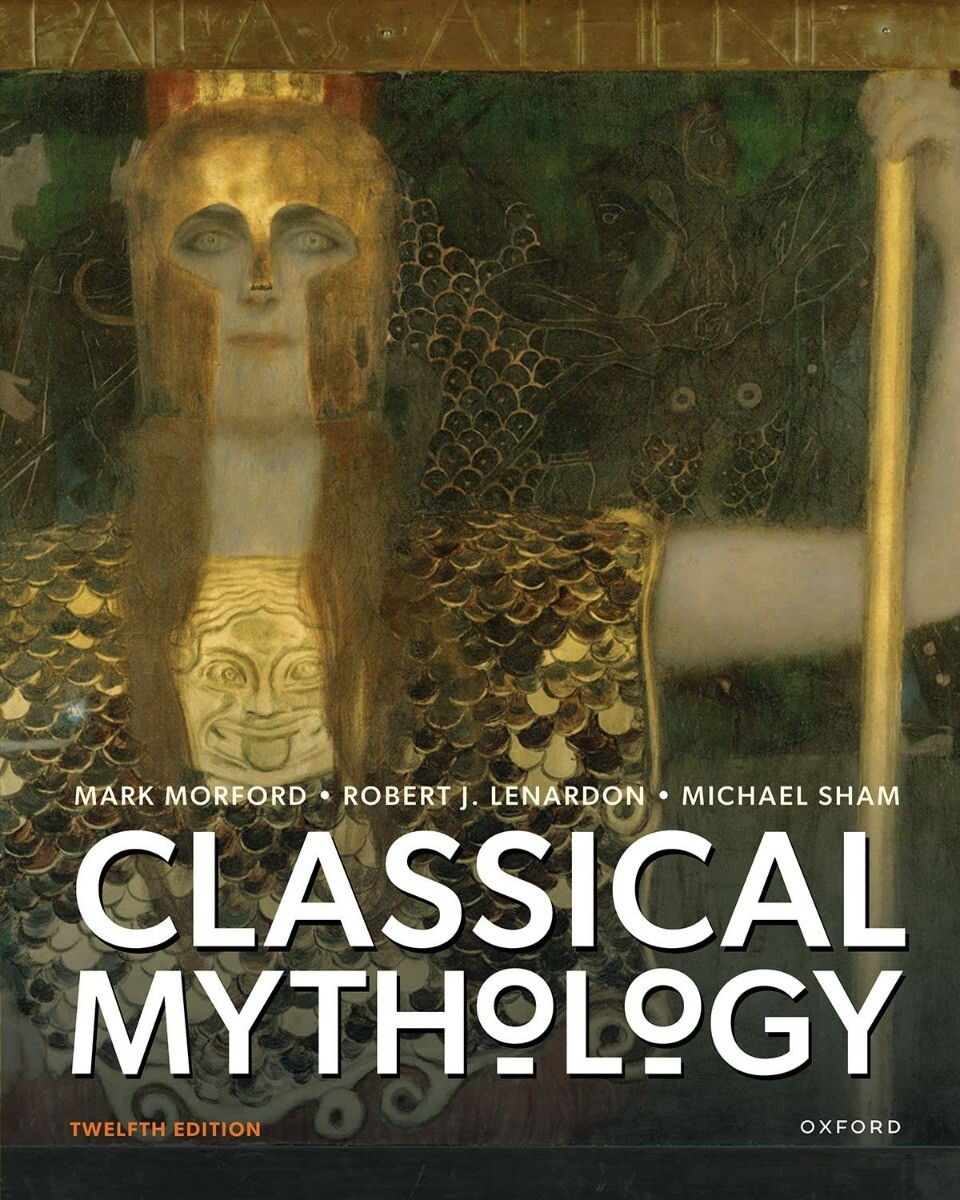
Academic Assignment: Sections 3 & 4 of Classical Mythology, 11th or 12th Edition. Mark Morford, Robert J. Lenardon, and Michael Sham:
Myths of Creation and Zeus’ Rise to Power
Continuing on with this textbook, we’re now getting into the myths properly. Of note, consider these myths in line with the modern scientific understanding of how our planet Earth formed.
A great companion to our jaunt through Greek religion is the Amazon Prime series, Great Greek Myths. Highly recommend.
Spiritual Assignment: Arete, the Best You Can Be
A common concept in much of modern Hellenism (reconstructed Greek religion) is that of the “Pillars of Hellenismos”. However, as discussed here and here, they weren’t well-defined concepts within the ancient Greek faith. Instead, they were developed through analysis of prevailing philosophies of that age and compared/contrasted with the stories of myth.
It seems this concept was derived from Timothy Jay Alexander, who founded the religion of Hellenismos. He was a controversial figure, although I’m personally not sure how bigoted he himself is or was. One major issue people take with his points of view is that as a Reconstructionist, he believes that Hellenic religious organizations should have the right to refuse to marry sterile or gay couples, and refuse office to the disabled. Of course, I am a disabled sterile person myself, but many polytheistic religions viewed the wholeness of the leader as synonymous with the wholeness of the governed people or land. Many ancient polytheistic cultures did view marriage solely for the purpose of tribal wealth exchanges and procreation, as sexual relationships outside of marriage were not forbidden.
I’m personally not interested in holding public office nor in marriage, nor do I much support any governing bodies of any kind as a political nihilist. I don’t believe our current or previous president have the mental faculties to lead a nation, and I know for a fact that I certainly don’t.
However, we live in different times and with a different culture, and I’m far less concerned with LARPing as an ancient polytheist than I am with honoring the gods in the right way in modern times. Our organization, at least, should not hold that view. Our society is completely different from that of the ancient Greeks, and marriage now doesn’t mean what it once did. Likewise, provided one’s disability is not a detriment to the ability to lead a ritual, I don’t see why the gods would have any issue with a disabled priest.
I’m also bothered by this attempt to fit the ideas of ancient Greece into a “Ten Commandments”, which you’ll also find with the “Nine Noble Virtues” in Asatru (Reconstructionist Norse religion). It seems an attempt to reinterpret things in a format for modern society, often by organizations stating their attempt to avoid doing so. But I digress….
All things considered, we can still discuss some of these concepts, since they were important to ancient Greek thought. Last week, we discussed xenia. This week, we’ll discuss arete.
From the Wikipedia article on this:
Arete (Ancient Greek: ἀρετή, romanized: aretḗ) is a concept in ancient Greek thought that refers to “excellence” of any kind—especially a person or thing’s “full realization of potential or inherent function.” The term may also refer to excellence in “moral virtue.”
The concept was also occasionally personified as a minor goddess, Arete (not to be confused with the mythological Queen Arete), who, together with sister Homonoia, formed the Praxidikai (“Exacters of Justice”).
In its earliest appearance in Greek, this notion of excellence was bound up with the notion of the fulfillment of purpose or function: living up to one’s potential. A person of arete is of the highest effectiveness; such a person uses all of their faculties—strength, bravery, and wit—to achieve real results. In the Homeric world, arete involves all of the abilities and potentialities available to humans. Though particularly associated with manly qualities, the Homeric usage of the term was not necessarily gender-specific, as Homer applied the term to both the Greek and Trojan heroes as well as major female figures, such as Penelope, the wife of Greek hero Odysseus. In the Homeric poems, arete is frequently associated with bravery, but more often with effectiveness.
Now, I have a problem with the way arete is discussed these days!
Honestly, I blame the Internet’s and Manosphere’s obsession with stoicism. The Stoic philosopher views virtue and rationality as the highest good in one’s life. As such, their view of arete involves what purpose you serve to society and are obsessed with gauging yourself externally. Many modern Greek polytheists would have you believe this is the only way to interpret arete, but this is simply not true.
Epicurus, another fine Greek philosopher, taught that pleasure—specifically the absence of pain and mental anxiety—is the highest good. Let’s compare these two philosophies:
Key Comparisons
| Feature | Stoicism | Epicureanism |
|---|---|---|
| Main Goal | Living a virtuous and rational life. | Achieving tranquility (ataraxia) and no physical pain (aponia). |
| Role of Virtue | Virtue is its own reward and the sole good. | Virtue is just a tool used to secure a pleasant life. |
| Social Life | You must do your duty and help society. | You should withdraw from politics and enjoy close friendships. |
| View of Death | Death is natural; do not fear it. | Death is nothing to us because we feel nothing after. |
| View of the Universe | The cosmos is ordered by divine reason. | The universe is made of random moving atoms. |
I tend to believe in an afterlife. Also, I believe in theomachy, which is somewhat different than what Epicurus believed. I really do love Epicurean philosophy more, though.
When I was a younger man, I took the view of the stoic. Carpe that diem, trying to constantly grab the bull by the horns and be the best I could be with the gifts I was given. However, I judged myself against the successes of others with similar interests or abilities. I also find myself completely discontented no matter how much I achieved. In the end, I became a mediocre imitation of everyone around me. I do not think arete can be found in that.
In my late 20s, I was diagnosed with autism. I found out why I had a hard time accomplishing certain things, or why I had struggles with fitting in with my peers. I had trouble with certain situations no matter what steps I took to remedy them, and this diagnosis made sense. In light of this, I decided I would try to understand what I needed in order to be happy and to meet those needs.
Often, I’ll discuss goals with younger folks or business people, and tell them I really only aspire for physical health and the ability to live without being at the mercy of someone else’s kindness. They’ll often retort with “why don’t you want to travel” or “why don’t you want a bigger entertainment center” or something similar.
My answer is always that if I find myself in the position to do so at some point, and have the energy and desire to do so, I certainly will travel or upgrade some things around me. However, I’m also happy where I am, and I do not dread the work needed to keep what I have. There was a time I focused on moving up the corporate ladder or trying to make as much money as possible so I had more vacations. When I took those vacations, I could not enjoy them because I dreaded the work week I faced when I returned. I do not want to live that way.
Likewise, my family has friends who lived for the FIRE method and were able to retire early. A number of them died during COVID or found a cancer diagnosis suddenly appeared and drained their retirement, forcing them back to work when they were at their weakest.
I once feared regrets in old age. I feared I’d regret the way I spent my time. However, leisure that restores my energy and inspiration and motivates me to do my best in everything I can is time well spent, even if it doesn’t make me money. If I am poor in old age, I will simply remind myself of this fact.
I’d much rather live contentedly and pursue my own health, mentally and physically. I am no good to anyone when overly anxious or stressed, and more often than not, I am a worse person for it. I feel arete is found, for me, in contentment and simple/frugal living. I opted for a vasectomy shortly after my diagnosis because I wanted to minimize my responsibilities and environmental impact; and maximize my free time spent among friends or in hobbies where my own nature as an individual shines. As an antinatalist, I also feel a vasectomy is the most virtuous expression of my values, as opposed to placing that burden upon my partner.
Likewise, I think of Dolly Parton, who passed away recently. I believe this is a woman who achieved arete. Yet, for all of the songs she wrote and sung; for all of her humor; for her rich history as a sex symbol; the thing most people talk about her the most for is how she treated others. In the end, I would want my life, personally, to reflect this above all.
Of course, if you disagree with this philosophy and seek arete in another way, you absolutely should. In fact, it’s even better if you find it. You might be the kind of person who can find arete in the stoic manner, and I support you and your belief in it. It is very important to me that you don’t simply take my word or philosophies as the right way, but rather that you experiment in your own life. What I’ve stated here is just a stance I don’t hear often repeated.
Therefore, I’ll define arete in this way:
Instead of being the BEST you can be, be the best YOU can be!
Consider how, moving forward, you can find arete in your own life.
For another overview of arete, I linked a podcast below